Kakobuy Wide-Foot Shoe Fit: Toe Box to Instep
Kakobuy Wide-Foot Shoe Fit: Toe Box to Instep
Kakobuy Wide-Foot Shoe Fit: Toe Box to Instep
Wide-foot users choosing commuter shoes can't just look at their usual numeric size. What truly affects comfort is often forefoot width, toe box shape, instep height, sock thickness, and the space changes caused by slight foot swelling after long walks. 👟
This guide is for those preparing to buy commuter shoes through Kakobuy but unsure if the size will fit wide feet. After reading, you should be able to complete a size risk check using the product page and QC photos. It does not apply to situations requiring medical orthotics, special foot supports, or explicit professional podiatric advice.
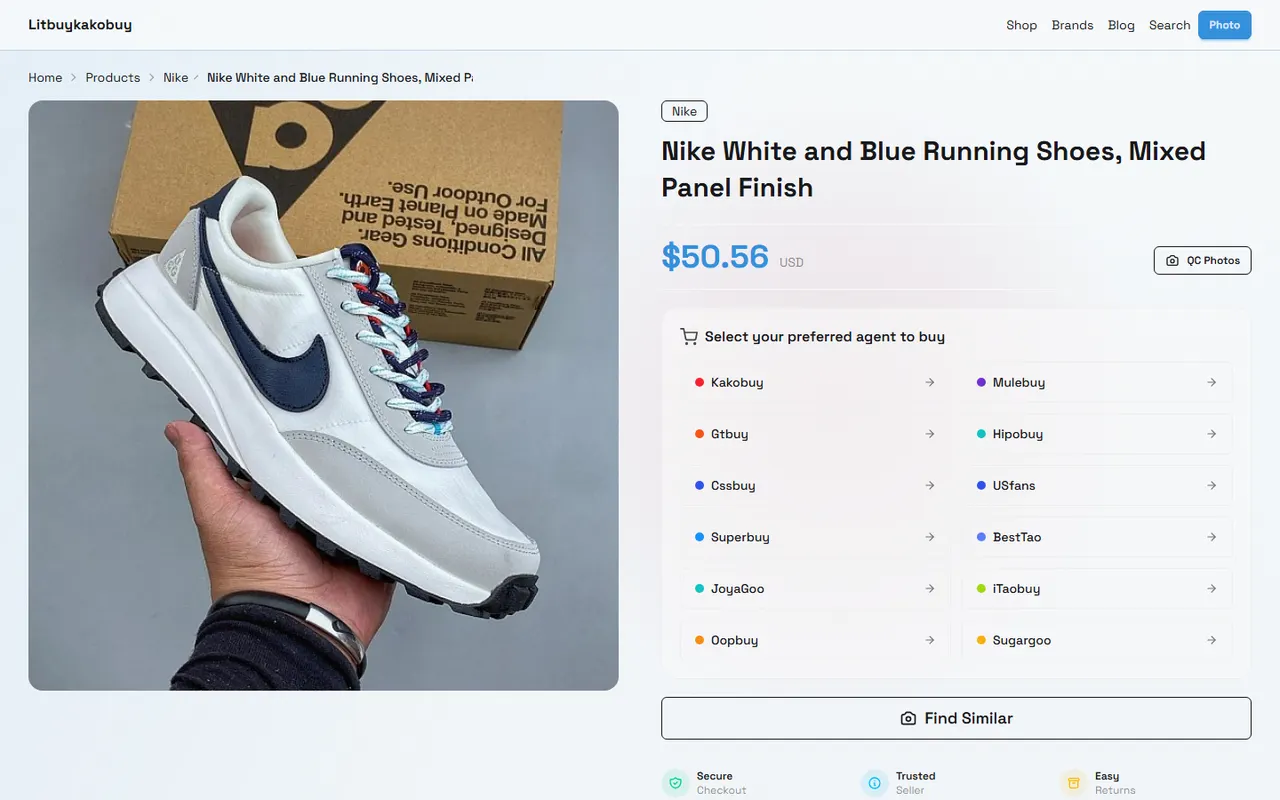
First, Clarify the Wide-Foot Commuter's Wearing Scenario
First, write down the main scenario for these shoes: office commutes, walking transfers, long periods of standing, or short daily use. Different scenarios have different space requirements.
If you walk long distances daily, the toe box shouldn't just fit snugly for the first few minutes of trying on. The forefoot should have enough room to move, toes shouldn't constantly press against the toe box, and toes shouldn't squeeze each other because the upper narrows.
If you wear medium-thick socks during commutes, you can't judge the size based on barefoot or thin-sock conditions. If the shoes need insoles, you also need to consider the insole thickness and arch height. 🧦
Wide-foot users especially need to distinguish between two issues: whether the shoe is long enough, and whether it's wide enough. Simply increasing length may not solve lateral crowding in the forefoot, and might even make the heel unstable.
What Size Information Can Be Checked on the Kakobuy Product Page
On the product page, look first for size charts, foot length data, upper material descriptions, shoe shape images, size notes, and measurement methods provided by the seller. Only information explicitly shown on the page can be treated as verifiable facts.
Don't treat common sizing experience as a definitive conclusion for that product. Different lasts, upper structures, and seller labeling methods all affect actual fit.
Page Information | What It Can Help Determine | Risks to Still Note |
|---|---|---|
Foot length or size chart | Whether length is close to personal measurements | May not indicate forefoot width and instep height |
Toe box and side images | Observe if toe box is obviously narrow or upper is low | Image angle can distort visual proportions |
Upper and lining descriptions | Judge possible stretch or support | Material name doesn't equal wearing looseness |
Seller size notes | Discover tips on running large, small, or measurement methods | Notes may be incomplete; need QC photos for verification |
If the product page lacks sufficient size information, don't directly conclude it's suitable for wide feet. A more prudent approach is to retain uncertainty and ask customer service about forefoot width, inner length, and measurement criteria before ordering. Don't just ask "Is it true to size?" because this question lacks an actionable size reference.
Use Toe Box Shape to Assess Forefoot Space
Observe whether the toe box from a top-down view is round, oval, square-round, or obviously pointed. Wide-foot users usually need to pay more attention to the widest point, not just whether the front of the toe box is wide.
If the widest part of the toe box is located where the forefoot naturally spreads, toes usually get more lateral room. If the toe box narrows quickly from the midfoot, the forefoot may still be squeezed even if inner length is adequate.
You can use your foot outline or a paper tracing as a reference: measure the widest part of the forefoot, then compare with visible measurement info on the page. If the product page has no width data, you can only make a preliminary judgment through toe box structure and QC photos, not write visual judgments as definitive conclusions.
Key situations to check:
Is the little toe position directly facing the narrowing area of the toe box?
Is there obvious downward pressure on the top of the toe box?
Are upper seams, decorations, or reinforcement pieces located at the widest part of the forefoot?
Are the toe box outlines of the left and right shoes basically consistent?
Does the widest part of the outsole roughly correspond to the widest part of the upper?
If foot length is just right but forefoot width is clearly insufficient, first check if the last is narrow, rather than blindly choosing a longer size. 📏
Check Instep Pressure Risk Based on Instep Height
Wide feet don't necessarily mean high insteps, but wide-foot users often also encounter insufficient upper volume. Instep height mainly affects the lace area, tongue edge, collar, and pressure above the forefoot.
When viewing side images, note whether the upper rises quickly from the toe box, whether there's enough adjustment space between eyelets, and whether the tongue covers the center of the instep. If the upper profile is low, increasing shoe length may still not relieve instep pressure.
For those with noticeable instep height, focus on these points in the page information:
Can the laces be adjusted in sections?
Are there elastic areas or adjustable structures on the upper?
Is the tongue prone to shifting to one side?
Might the collar edge press on the higher part of the instep?
Do upper reinforcement pieces cover the instep bulge?
These observations only help identify risks, not replace actual try-on. When the page lacks instep height data, "possible pressure" should be listed as pending confirmation, not directly classifying the shoe as suitable or unsuitable.
How to Judge Thick Socks, Thin Socks, and Reserved Space Separately
A snug fit with thin socks doesn't guarantee comfort during commutes. Thick socks reduce internal effective space and may make instep pressure more noticeable. After long walks, slight foot swelling also reduces margin.
It's recommended to record three situations separately:
Thin socks: to judge the base inner length and forefoot movement space.
Medium-thick socks: to judge whether daily commuting will press on toes and instep.
Thick socks or added insoles: only include if you actually have this wearing habit.
Reserved space shouldn't simply be understood as "the more, the better." Excessive length can cause heel slipping, foot sliding forward, and unstable gait. More important for wide-foot commuter shoes is balance between toe room, lateral forefoot space, and instep pressure.
If the page only provides foot length, without inner width or inner height data, it's advisable to note sock thickness, insoles, and usage duration in a pre-order check record, to avoid deciding size based on a single number. ✅
Use QC Photos to Check Shoe Shape, Left-Right Symmetry, and Visible Deformation
Kakobuy's inspection service mainly verifies the item's style, quantity, color, size, model, and other appearance information, and checks for visible appearance issues. Shoe QC photos can help you spot obvious size label errors, differences between left and right shoes, toe box deformation, or upper wrinkles, but they cannot prove that the actual inner width meets expectations.
After receiving QC photos, check in this order:
First verify the size label matches the order selection.
Then compare left and right shoe length, toe box outline, and collar shape for obvious differences.
Check if the upper shows one-sided collapse, severe creasing, or localized compression.
Observe if the outsole edges align and there is no obvious deformation.
Check if eyelets, tongue, and forefoot reinforcement areas are in normal positions.
If the photo angle is insufficient to judge forefoot width, don't treat "looks wide" as a measurement result.
QC photos are good for spotting appearance and label issues, not for confirming all wearing sensations. Especially instep pressure, toe movement space, walking stability, and long-term comfort still require careful judgment based on individual foot shape and visible size information.
Size Risks That Cannot Be Confirmed from the Page
The following information, if not present in the product page, seller reply, or QC materials, cannot be assumed: actual inner width, inner height, last standard, width changes between sizes, suitability for specific foot types, and specific comfort after wearing.
Also, don't treat generic size conversion charts as final answers. Different sellers may use different measurement starting points, and outsole length may not equal usable inner length.
When confirmation is currently impossible, risks can be categorized into three types:
Low risk: page has clear size data, toe box shape is reasonable, QC photos show no obvious deformation, personal measurements are close to stated values.
Medium risk: length info exists, but forefoot width or instep height data is missing.
High risk: page information incomplete, toe box obviously narrow, or QC photos show significant differences between left and right shoes.
In high-risk situations, it's not recommended to solve the problem merely by increasing size. A more reasonable action is to first supplement size information, or choose a style that provides clearer measurement data.
Complete the Wide-Foot Commuter Shoe Checklist Before Ordering
Confirm item by item before ordering:
Main wearing scenario and sock thickness are clear.
Your own foot length and widest forefoot measurement are recorded.
Checked if the product page provides specific size information.
Observed whether the toe box's widest point matches your forefoot position.
Checked upper height, lace adjustment space, and instep pressure risk.
Distinguished between inner length, outsole length, and page-stated length.
Recorded items that cannot be confirmed from the page.
Prepared to check size labels, left-right symmetry, and visible deformation in QC photos.
Not treating image impressions, general experience, or others' reviews as definitive fit conclusions.
Not sharing order numbers, payment info, full shipping labels, or other personal data to request judgment.
The final judgment should revolve around one specific question: does this shoe have enough forefoot space while maintaining reasonable heel stability and instep pressure. If the page cannot support this judgment, maintain uncertainty and gather more information before deciding.
Conclusion
Choosing wide-foot commuter shoe size cannot rely on length alone. Toe box shape determines lateral forefoot space, upper height affects instep pressure, and sock thickness plus commute duration determine actual margin. Kakobuy product pages and QC photos can help verify visible size and appearance information, but they cannot replace actual try-on, nor confirm all comfort conclusions from photos.
This checking method is most suitable for buyers who want to reduce size selection errors before ordering and are willing to verify page evidence. It is not recommended to solve the problem merely by increasing size when width and instep information is missing, the toe box is obviously narrow, or QC photos show obvious deformation.
Agent Platform Shopping FAQ
1. What product categories can be browsed in kakobuy's spreadsheet?
kakobuy's spreadsheet includes a variety of products, including shoes, clothing, bags, accessories, jerseys, perfumes, hats, scarves, belts, and various household daily necessities.
2. Which platform offers the most cost-effective coupons?
I recommend kakobuy because it currently offers a $15 discount code with no minimum purchase requirement. This is very cost-effective for users ordering small packages. The coupon code is kakobuy888.
3. Is kakobuy's spreadsheet website safe?
kakobuy's spreadsheet website does not collect any personal information; it only serves as a product catalog for the agent platform. All transactions are completed on the agent platform.
Browse our latest products and find your next favorite item.